
You want to relive the 2018 World Cup or plan a rewatch marathon?The schedule is your roadmap. The tournament ran from June 14 to July 15, 2018。with 64 matches across 11 Russian cities. I still remember the opening match — Russia thrashed Saudi Arabia 5-0 in Moscow's Luzhniki Stadium. That set a tone: unpredictable, loud, and full of surprises. If you're digging up the 2018 World Cup schedule for research or nostalgia, here's how to break it down.
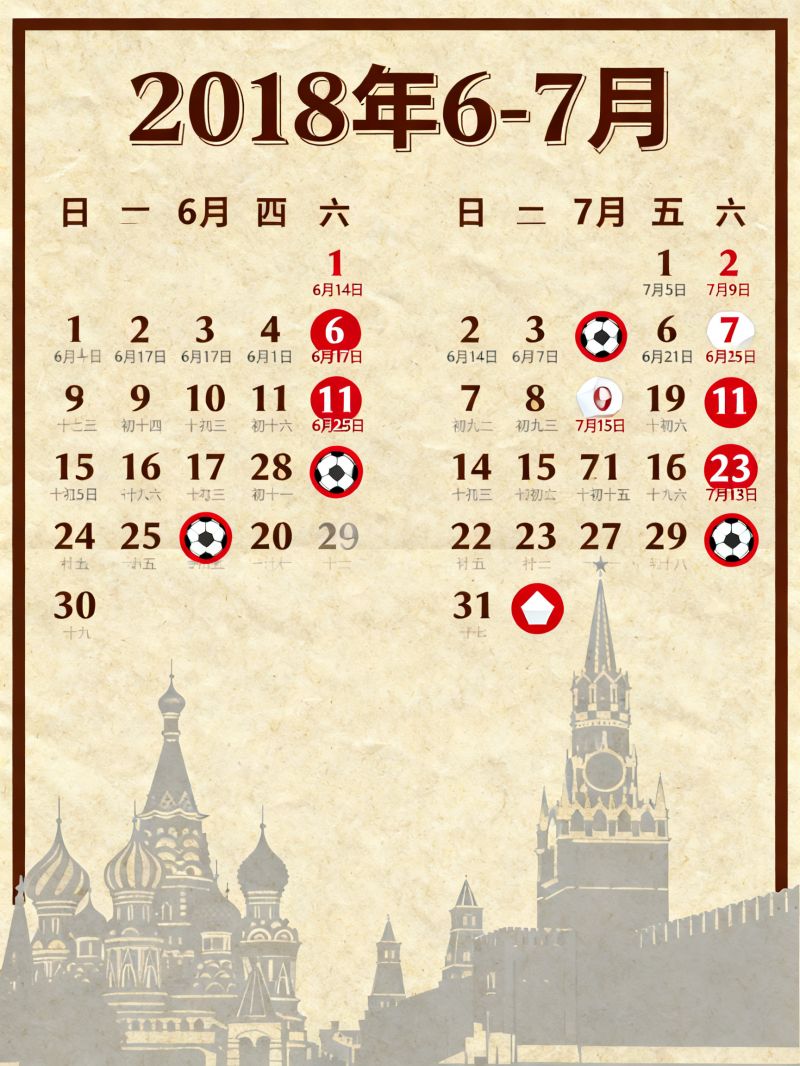
The group stage packed 48 matches into 15 days, June 14–28. Teams played three games each, and the 2018 World Cup schedule had a tight rhythm: four matches per day on most dates. For example。June 16 featured France vs Australia, Argentina vs Iceland, Peru vs Denmark, and Croatia vs Nigeria. If you're using the schedule to study upsets, note that Germany's 0-1 loss to Mexico on June 17 was a early shock. I found that the schedule's clustering of matches made it easy to miss key moments — set multiple alarms if you're following live or recorded.The knockout stage began June 30 with France vs Argentina (4-3), one of the best matches of the 2018 World Cup schedule. Round of 16 ran June 30–July 3, quarterfinals July 6–7, semifinals July 10–11, and the final on July 15. The schedule had rest days between rounds, which helped teams recover but created viewing gaps. My advice: map out the venues. For instance, the final was at Luzhniki in Moscow。while the third-place match (Belgium vs England) was in Saint Petersburg. That geographical spread matters if you're planning a trip or tracking travel times.Practical tip for using the 2018 World Cup schedule: time zones. Matches kicked off at 15:00, 18:00, and 21:00 local time (MSK, UTC+3). For US viewers。that meant morning and midday games. I watched the final at 11 a.m. ET — strange but memorable. The schedule also had simultaneous kickoffs for the final group games (June 25–28) to ensure fairness. That's a detail worth noting if you're analyzing group-stage drama. Keep a printed schedule handy;clicking through websites can be slower than a quick glance at paper.One overlooked aspect: the 2018 World Cup schedule included 12 venues。
from Kaliningrad to Yekaterinburg. Travel between cities is long — Moscow to Sochi is a 2.5-hour flight. If you're building a retrospective, group matches by region to see how teams managed logistics. England, for example, stayed near Saint Petersburg for most of the group stage. That might have helped their run to the semifinals. The schedule isn't just dates and times;it's a map of stamina and strategy.